
Cricket's Shifting Geography: The Format War, Capital Pressure and the Player's Limits
क्रिकेट आज तीन प्रारूपों (टेस्ट, एकदिवसीय, टी20) के सहअस्तित्व, फ्रैंचाइज़ी लीगों के वैश्विक विस्तार और खिलाड़ियों के बढ़ते कार्यभार के बीच एक संरचनात्मक तनाव से गुज़र रहा है। 1877 में शुरू हुआ टेस्ट क्रिकेट प्रतिष्ठा में सर्वोच्च है लेकिन आर्थिक रूप से कमजोर पड़ रहा है; 2003 में शुरू हुए टी20 और 2008 में शुरू हुई आईपीएल ने खेल की आर्थिक वास्तुकला बदल दी। इस विस्तार का मुख्य जोखिम अंतरराष्ट्रीय और लीग कैलेंडर का टकराव तथा खिलाड़ियों पर शारीरिक-मानसिक बोझ है, जिस पर विराट कोहली, बेन स्टोक्स और पैट कमिंस जैसे खिलाड़ी सार्वजनिक रूप से चिंता जता चुके हैं। महिला क्रिकेट का उदय और अमेरिका जैसे नए बाज़ारों की ओर विस्तार इस तस्वीर के सबसे उत्साहजनक पक्ष हैं, जबकि शासन में पारदर्शिता और छोटे क्रिकेट देशों के प्रतिनिधित्व की कमी प्रमुख चिंता है।
The world of cricket is passing through a strange paradox. On one side, the game's global expansion is happening at a pace never seen before — new markets are opening, broadcasting rights are being sold at record prices, and franchise leagues are establishing footholds in every corner of the world. On the other side, the same game is colliding with the limits of its most fundamental resource: the player's body and time. The tension that arises between these two truths is at the centre of every major cricket debate today.
This article is not an analysis of a single match, series or tournament. It is an attempt to understand the structural threads that are shaping the game at this moment — the coexistence of three formats, the economic earthquake brought by T20, the crowding of the league-based calendar, the ongoing debate over Test cricket's place, and amidst all of it, the question of player workload.
Cricket's most unusual feature is that it has three internationally recognised formats running simultaneously. The oldest is Test cricket, which began in 1877 and can last five days. Then came the one-day format in 2026, compressing the game into a single day. And then, in 2026, the first international T20 match was played — a format initially regarded as light entertainment, but which within two decades has transformed the entire economic architecture of cricket.
This coexistence of three formats is both cricket's strength and its burden. A strength because every kind of viewer finds something to their taste — the patience of classic Test cricket, the balance of the one-day game, the explosion of T20. A burden because a single player must prepare differently, physically and mentally, for all three, and the international calendar keeps stretching itself in an attempt to accommodate them all at once.
Test cricket is still regarded as the game's hardest examination. It is the only format in which technique, patience, mental resilience and a strategy sustained over five days are all tested together. In traditional cricket nations, Test cricket retains the highest prestige, and many players regard it as the true measure of a career. But economically, Test cricket is becoming the weakest link. In audience numbers, broadcast duration and ticket sales, it lags far behind T20. The result is that the number of Test matches is shrinking in several countries, and maintaining it is becoming even harder for the smaller cricket nations.
What T20 changed was not merely the game but the outlook. It turned cricket into a three-hour package that could be sold in prime-time television. The first T20 World Cup was played in 2026, and its success made clear that this format held limitless commercial potential. The very next year, in 2026, the Indian Premier League was launched — and the world of cricket saw the model that would go on to be replicated around the globe.
The franchise league model is fundamentally different from cricket's traditional structure. In traditional cricket, a player plays for a country — his identity is tied to the national team. In league cricket, a player plays for a city or a brand, and his loyalty is determined by the terms of a contract. This shift is not merely administrative but cultural. It opened new avenues of income for players, gave foreign players experience of conditions in different countries, and brought players from smaller cricket nations onto a stage they might never have reached through their national teams.
But this same model has also created a new problem. As leagues spread across the world, the international calendar and the league calendar begin to collide. For a player, it becomes difficult to decide which commitment to prioritise. National team series, domestic league, foreign league and personal rest — managing all four together becomes nearly impossible. Out of this collision is born the debate that has now become the biggest challenge for cricket administration: how much workload is reasonable for a player?
To understand this debate, one must accept a simple truth — cricket's burden on the body is abnormal. Fast bowlers' shoulders, knees and backs remain under constant stress. Batters must react to every ball, placing continuous strain on concentration and the eyes. A wicketkeeper must crouch through the entire match. And all of this happens with different intensities across different formats. When a player plays four different formats in three countries within a month, the body gets no time to adapt.
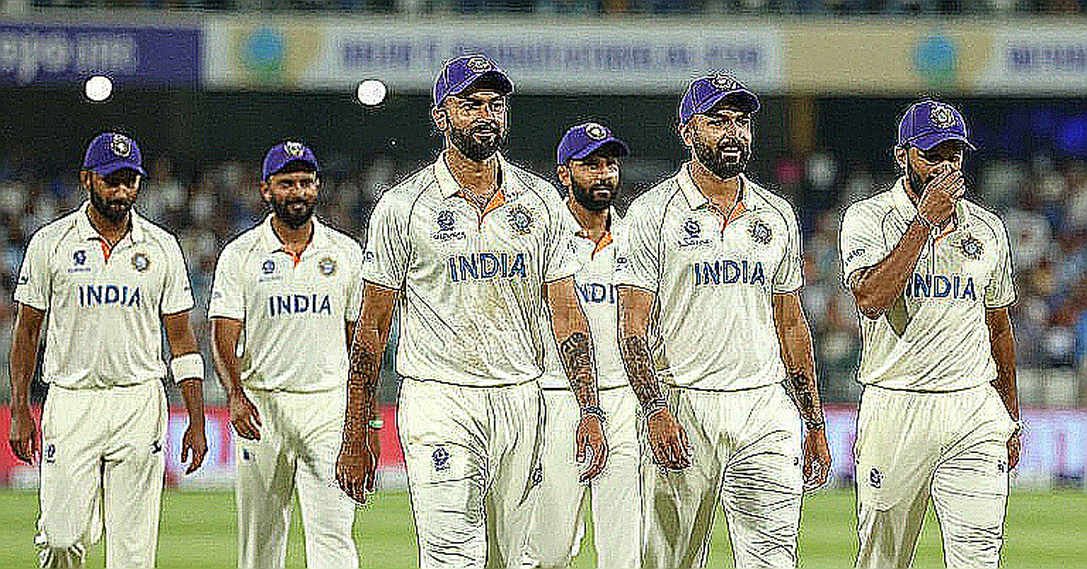
In recent years, several leading players have spoken publicly about the need for workload management. Players such as Virat Kohli, Ben Stokes and Pat Cummins have acknowledged on different occasions that playing continuously is challenging on both mental and physical levels. Some players have even taken a break from the game for a period. These decisions may be personal, but their collective message is clear: the game's calendar cannot grow at the same pace as its commercial demand.
Conversations on this issue continue between player associations and administrators, but interests collide directly. Broadcasters and league owners want more matches because every match generates revenue. National boards want to balance their domestic seasons with international commitments. Players want rest. And the audience — the ultimate foundation of this entire system — wants continuous cricket, but not cricket in which players appear tired and unmotivated. This four-way tension can be resolved not by the victory of any one side, but by a carefully constructed balance.
The debate over Test cricket's future is the most delicate part of this balance. Some believe that to save Test cricket, its quantity should be reduced and its quality enhanced — fewer matches, but better context and stronger competition. Others believe that Test cricket's value lies in its continuity, and that limiting it to special occasions alone would damage its soul. Both sides have their own logic. But one thing is clear — if Test cricket is kept alive only in the name of tradition and no interest in it is generated among the new generation, it will gradually become a museum piece.
Meanwhile, cricket's geography is also changing. Beyond the traditional centres — India, Australia, England, Pakistan, South Africa, New Zealand, Sri Lanka, the West Indies, Bangladesh — attention is now turning to new markets. Efforts to establish cricket on a large scale in the United States have intensified, and major international tournaments have already been staged there. This expansion is economically rational, but it carries a risk — the pressure to increase investment in new markets can reduce the share of older, smaller cricket nations. If that happens, cricket's globalisation will not be genuine globalisation, but merely market expansion.
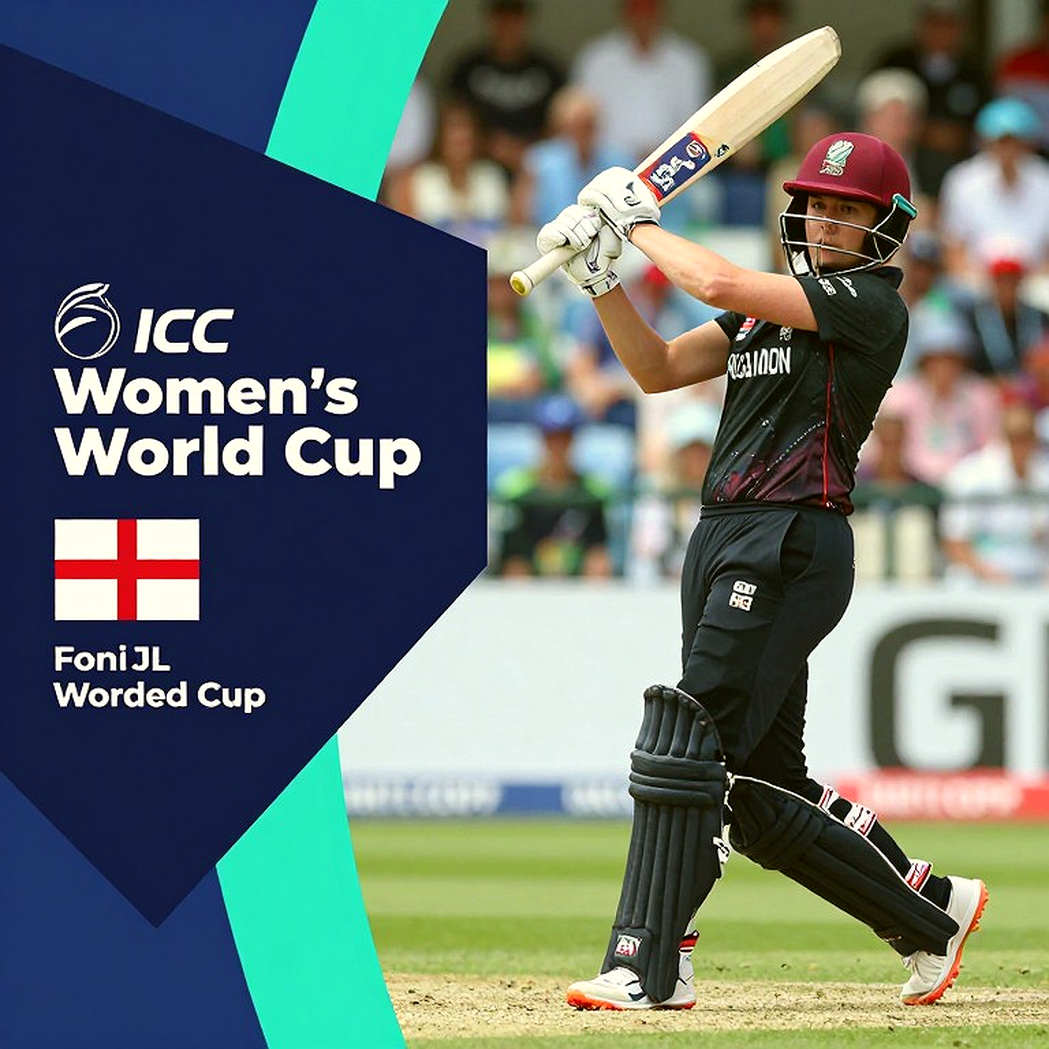
Women's cricket is the most encouraging part of this whole picture. The pace at which women's cricket has gained popularity and commercial investment in recent years has never been seen before. Women's T20 and one-day World Cups now draw serious audience numbers, and women's franchise leagues have begun in several countries. This is not merely a matter of representation — it is also a matter of enlarging the game's total market. When half the population is brought to the centre of the game, the reach of audience, talent and revenue all expand.
But women's cricket faces the same structural challenges that men's cricket does, and some additional ones. Pay inequality, differences in media coverage, and a lack of domestic infrastructure — these are issues on which much work remains. The good news is that these issues are now being discussed openly, and several boards have taken concrete steps.
Above all this is another question — the governance of cricket. The International Cricket Council is responsible for governing cricket worldwide, but its structure reflects differing interests among member nations. Larger boards hold more power; smaller boards have a weaker voice. This imbalance affects scheduling, revenue distribution and decision-making alike. Many critics believe that both transparency and representation need to increase in cricket's global governance, so that the game's expansion does not remain confined to a few markets.
The audience and media rights side is also part of this discussion. In the era of digital broadcasting, the question arises of how accessible cricket will remain. If major tournaments are available only on expensive subscription platforms, the game's social base could shrink. In a country like India, cricket's strength has been that it reaches from the street to the stadium. If that reach narrows, the very foundation of the game's popularity will weaken.
The essence of all this is that cricket stands today at a decisive turning point. It has unprecedented opportunities — new markets, new technology, new audiences, and in women's cricket an entire field that was previously overlooked. But it also has unprecedented risks — the exhausted body of the player, the weakening base of Test cricket, and a calendar that grows fuller every year.
The real challenge is not how to make cricket bigger — that is already happening. The real challenge is how to make it sustainable. A game that burns out its players, loses its oldest tradition, and excludes its poorest audiences may become bigger, but it will not become stronger. Cricket's next chapter rests on the answer to this question.
संबंधित खिलाड़ी
अनुशंसित
Sussex's Third Place and the Twelve-Point Deduction: When the Table Doesn't Lie, It Just Tells Half the Story2026-11-05
Stage-1 Came Back Empty: The Cricket Data Pipeline Audit That Had Zero to Count2026-10-28
The 'Back-Garden' Match at Drummoyne Oval: Where Sydney Thunder vs Perth Scorchers Is Really Won2026-11-06
GT and DC Discuss Ashutosh Sharma Trade: Gujarat Seek a Finisher as Delhi Target Fast-Bowling Reinforcements2026-11-09
Sexual Harassment and Social Media Violence Against Female Sports Journalists in Cricket: An Industry's Truth2026-11-09
The Empty File: How the Ranji Data Desert Quietly Decides India's Selections2026-11-01